Channel sheet · CH-17 · gain 3 min · logged October 1, 2026
Automation & AgentsDirect input
MiQ Brings AI-Powered Marketing Platform Sigma to India
MiQ has launched its AI-powered marketing platform Sigma in India, aiming to simplify campaign management across fragmented digital advertising platforms.
By Nathan Brooks3 min read696 words
Signal notes
- MiQ has launched its AI-powered marketing platform Sigma in India.
- Sigma is designed to simplify multi-platform advertising for brands and agencies.
- The platform applies AI to campaign management tasks that previously required manual coordination across platforms.
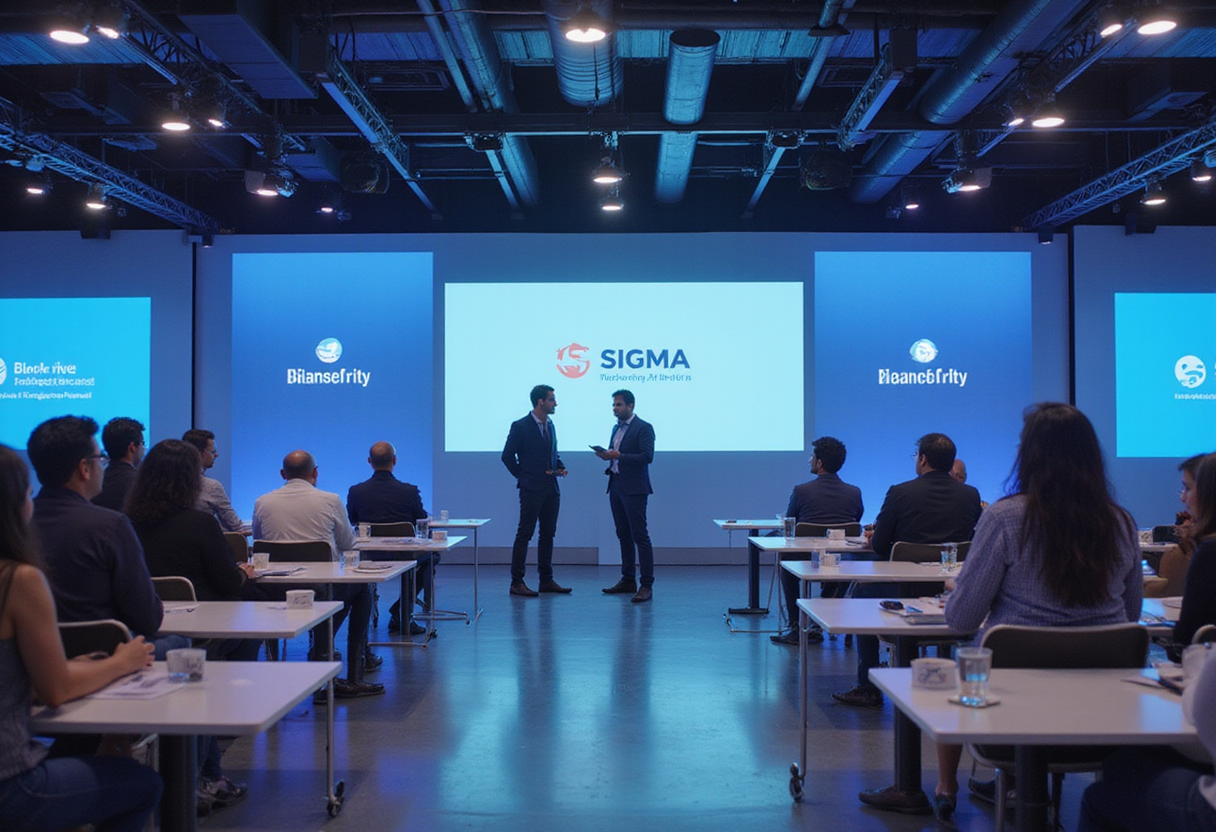
MiQ has launched its AI-powered marketing platform, Sigma, in India. The company positions the product as a tool for simplifying multi-platform advertising — a persistent pain point for brands trying to run campaigns across fragmented digital channels.
Sigma is not a new name for MiQ. The platform has operated in other markets, and the India launch extends it to one of the fastest-growing digital advertising economies. MiQ's core business is programmatic marketing, and Sigma represents the company's attempt to bundle planning, execution, and measurement into a single interface driven by AI.
The problem Sigma claims to solve is familiar to any media buyer. Advertisers juggle campaigns across search, social, video, and display platforms, each with its own buying interface, data formats, and reporting conventions. The overhead of stitching those together eats time and budget. MiQ says Sigma consolidates that workflow, using AI to handle tasks that previously required manual coordination across platform teams.
For the Indian market specifically, the pitch lands at a moment of rapid change. Digital ad spend in India continues to climb, and brands there face the same fragmentation as their global counterparts — often with leaner teams and tighter margins. A platform that promises to reduce operational complexity has an obvious audience among Indian advertisers scaling multi-channel campaigns.
What Sigma does
According to MiQ, Sigma is built to simplify how advertisers manage campaigns across multiple platforms simultaneously. The AI component handles optimization decisions that would otherwise sit with human teams. The goal, as the company frames it, is to let marketers focus on strategy while the platform manages execution details.
MiQ has marketed itself as a data-and-technology player in programmatic, and Sigma fits that positioning. The platform sits on top of the company's existing infrastructure for audience data and media buying.
Why India, why now
The India launch follows a broader pattern among adtech vendors. Global platforms increasingly treat India as a priority market rather than an afterthought, citing expanding digital consumption and a maturing advertiser base. MiQ already operates in the country, and Sigma gives its local teams a product to sell into that demand.
For Indian brands and agencies, the practical question will be whether Sigma delivers measurable efficiency gains — reduced campaign management time, better cross-platform performance, cleaner measurement — or whether the AI label is doing more work than the underlying technology. That question applies to every AI-branded marketing tool on the market right now, and buyers will judge Sigma on results rather than positioning.
The competitive context
MiQ competes in a crowded field. Independent programmatic shops, agency holding groups, and the big ad platforms themselves all sell solutions aimed at simplifying multi-channel advertising. Each claims some version of AI-driven automation. Sigma's differentiation rests on MiQ's positioning as an independent operator — not owned by a media seller — combined with the platform's cross-platform scope.
Indian advertisers evaluating Sigma will weigh it against alternatives from those competitors, including tools embedded directly in the walled gardens of major platforms. The independent angle matters to buyers worried about conflicts of interest, but it does not guarantee superior performance.
What to watch
The launch raises straightforward questions for the months ahead. Which Indian brands sign on as early adopters, and what results do they report? Does MiQ disclose concrete performance benchmarks for Sigma campaigns, or keep claims at the level of generalities? How does pricing compare to existing multi-platform management options in the Indian market?
MiQ has not, in the launch messaging, offered detailed case-study numbers for Indian deployments. That leaves the burden of proof on live campaigns. Advertisers considering the platform should ask for specifics: what workflow steps Sigma actually automates, how measurement across platforms is reconciled, and what the total cost of running campaigns through the platform looks like against their current stack.
Bottom line
MiQ has shipped Sigma to India with a clear pitch: one AI-driven platform instead of many disconnected tools for multi-platform advertising. The launch aligns with where the market is heading. Whether it delivers on the simplification promise is something Indian advertisers will establish through deployment, not through the announcement.
via Google News — AI social media marketing (Source)
More from Nathan Brooks
Show full bio
Correspondent covering marketplaces and e-commerce at Mart Signal.
25 articles
Bus out
- JCDecaux Transport Brings AI Audience Measurement to MTR Advertising
- Meta Unveils AI Agents to Automate Ads for Brands and Shoppers
- Musk lays out AI-led Grok advertising future for X
- IAB Building Framework to Standardize AI Advertising Measurement
- Circana Pairs Liquid Mix With Google Meridian for Marketing Measurement